Recent Work
Shingle & roof-deck project photos
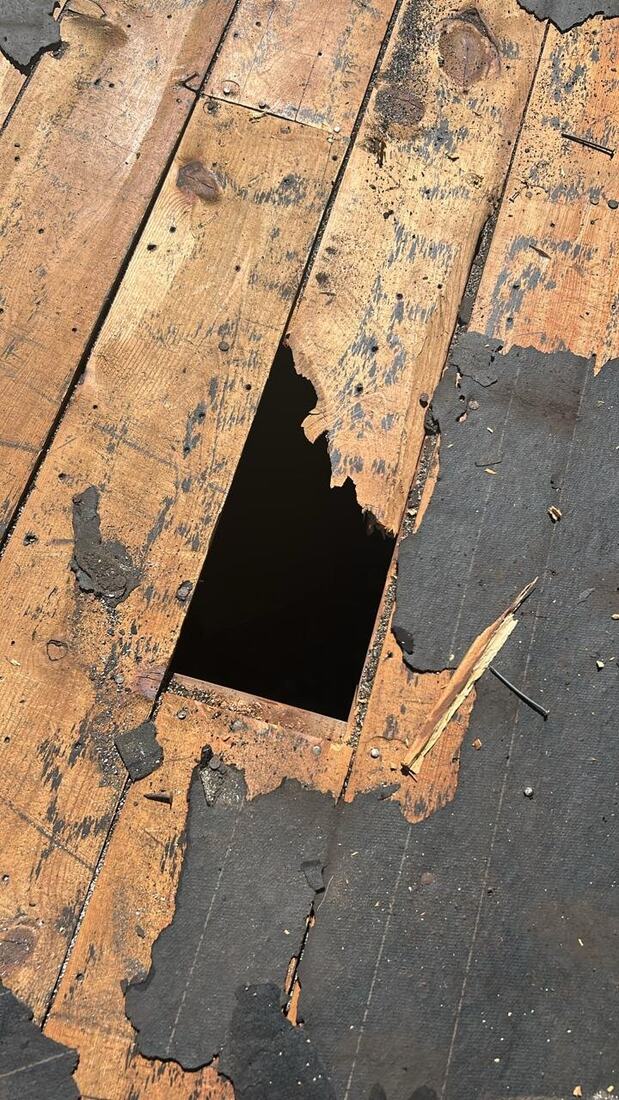
Damaged Decking Before Repair
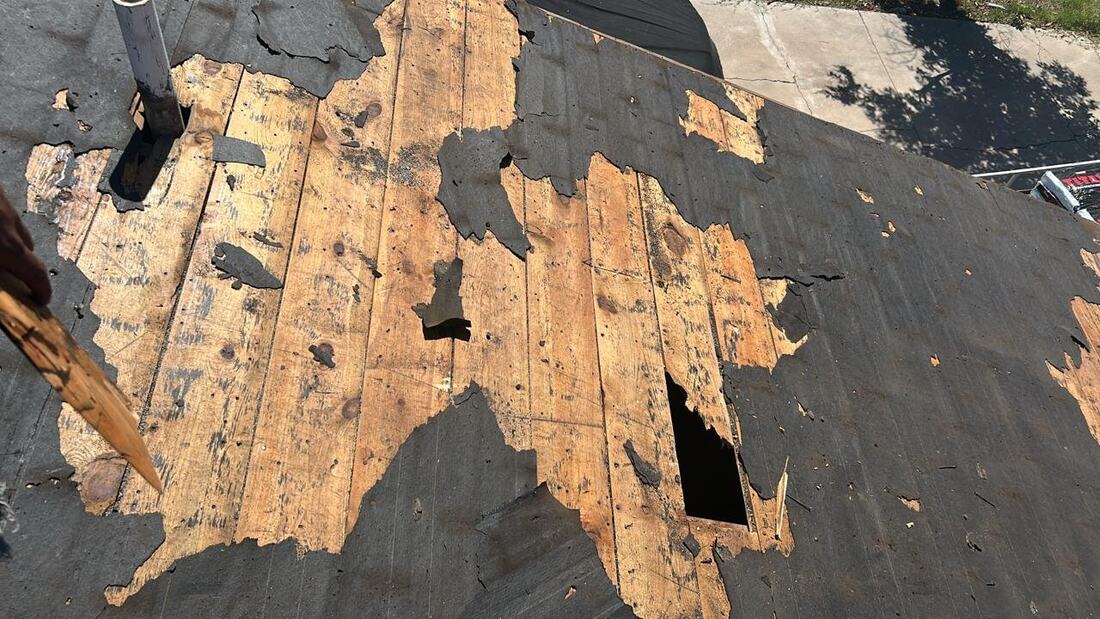
Rotted Plywood Decking
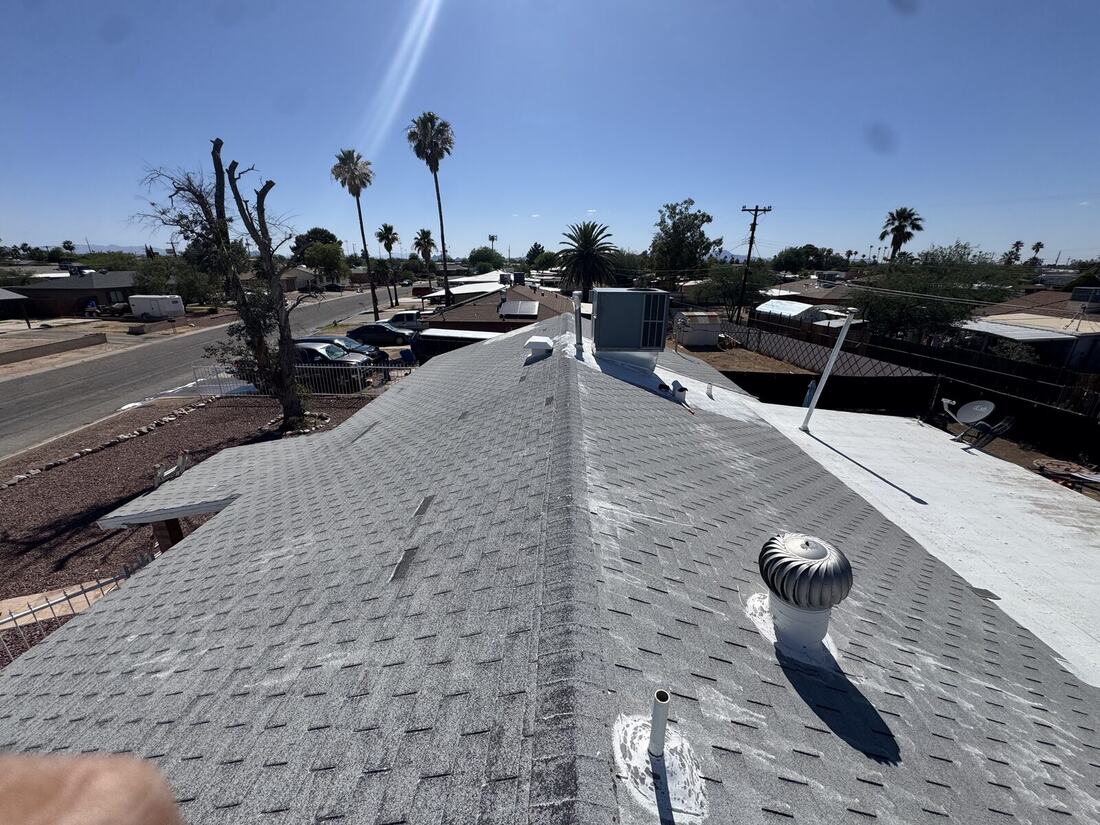
Shingle Roof + Flat Roof Coating
Full shingle roof installations, replacements, and targeted repairs — evaluated honestly based on your roof's actual condition, not a default push toward replacement.
Shingle roofs age gradually, and several visible and hidden factors go into whether repair or replacement makes sense.
Shingles that curl at the edges or feel brittle to the touch are showing age-related wear that can reduce their weather resistance.
Excessive granule loss (often visible as buildup in gutters) exposes the shingle's underlying material to more direct UV and weather exposure.
Missing, lifted, or displaced shingles — common after Tucson's monsoon winds — leave the roof deck more exposed and are usually addressed as a priority repair.
Interior staining or active leaks point to a failure somewhere in the roofing system — the shingles, flashing, or underlayment — and warrant a prompt inspection.
Deteriorated or improperly installed flashing around chimneys, vents, and valleys is a common source of leaks independent of the shingles themselves.
What's found once shingles are removed — soft spots, rot, or water staining on the decking — can affect the scope of a repair or replacement project.
Deciding between repair and replacement depends on several factors together, not any single issue in isolation: the roof's age, overall condition, extent of damage, history of previous repairs, and the condition of the underlayment, decking, and flashing. We do not recommend replacement for every older roof — a roof with isolated, repairable damage and a sound deck may only need targeted work.
Isolated damage, a limited number of affected shingles, and a roof deck and underlayment in reasonably sound condition can often be addressed with a targeted repair rather than full replacement.
Widespread deterioration, repeated repairs to the same areas, damaged underlayment or decking found during inspection, or a roof nearing the end of its material's typical service life are all factors that can point toward replacement being the more appropriate option.
When replacement is the appropriate option, it can offer some real, factual benefits — without guaranteeing outcomes we can't control.
Replacement installs new roofing materials, addressing widespread age-related deterioration rather than patching around it.
Damaged underlayment, decking, and flashing can be replaced as part of the project rather than left in place under new shingles.
Replacement provides an opportunity to inspect roof-deck and structural components that are normally hidden from view, and to address anything found before it's covered again.
A new roof improves the overall condition and appearance of the roofing system, installed according to manufacturer requirements for the selected material.
We assess the current condition of the shingles, flashing, and (where visible) underlayment and decking.
We provide a written estimate outlining the recommended scope of work based on what the inspection found.
We discuss shingle material and product options appropriate for your roof and budget.
Landscaping, driveways, and other property areas are protected before work begins.
Existing shingles are removed down to the deck when replacement (rather than repair) is the scope of work.
The exposed decking is inspected for damage once old material is removed.
Damaged decking found during inspection is repaired or replaced before new roofing goes down.
New underlayment is installed as the waterproofing layer beneath the shingles.
Flashing at valleys, penetrations, and edges is installed or replaced as part of the system.
Shingles are installed according to manufacturer specifications, including proper drip edge detailing.
Ridge and hip details, and roof ventilation components, are addressed where applicable to the system installed.
The job site is cleaned, including a magnetic sweep for stray nails/debris around the property.
We perform a final quality check of the completed work before considering the project finished.
We walk the finished roof with you, answer questions, and go over your workmanship documentation.
Damaged Decking Before Repair
Rotted Plywood Decking
Shingle Roof + Flat Roof Coating
An inspection is the reliable way to know. We evaluate age, damage extent, prior repairs, and the condition of underlayment and decking together, rather than recommending replacement by default.
Damaged sections of decking are repaired or replaced before new underlayment and shingles are installed — this is addressed as part of the process, not skipped.
Not necessarily. Isolated, limited damage can often be repaired. Replacement becomes more likely to be recommended when damage is widespread or underlying components are compromised.
Timelines vary by roof size, scope of work, and weather — we'll give you a project-specific timeframe as part of your written estimate.
For more on how we decide between a repair and a larger scope of work, see our Roofing Knowledge Center. For roofline wood damage found alongside shingle issues, see Fascia & Wood Replacement.
An honest evaluation of repair vs. replacement starts with an inspection.