Parapet waterproofing, reinforced coating repair, and resealing for flat and commercial roof systems in Tucson — addressing a commonly overlooked area where water intrusion often starts.
A parapet is the low wall that extends above a roofline, common on flat and low-slope roofs including many commercial and some residential buildings in Tucson. Parapets create a roof-to-wall transition — a junction point that requires careful flashing and waterproofing detail. Because water naturally collects near these transitions, parapets are one of the more common places a flat roof develops leaks.
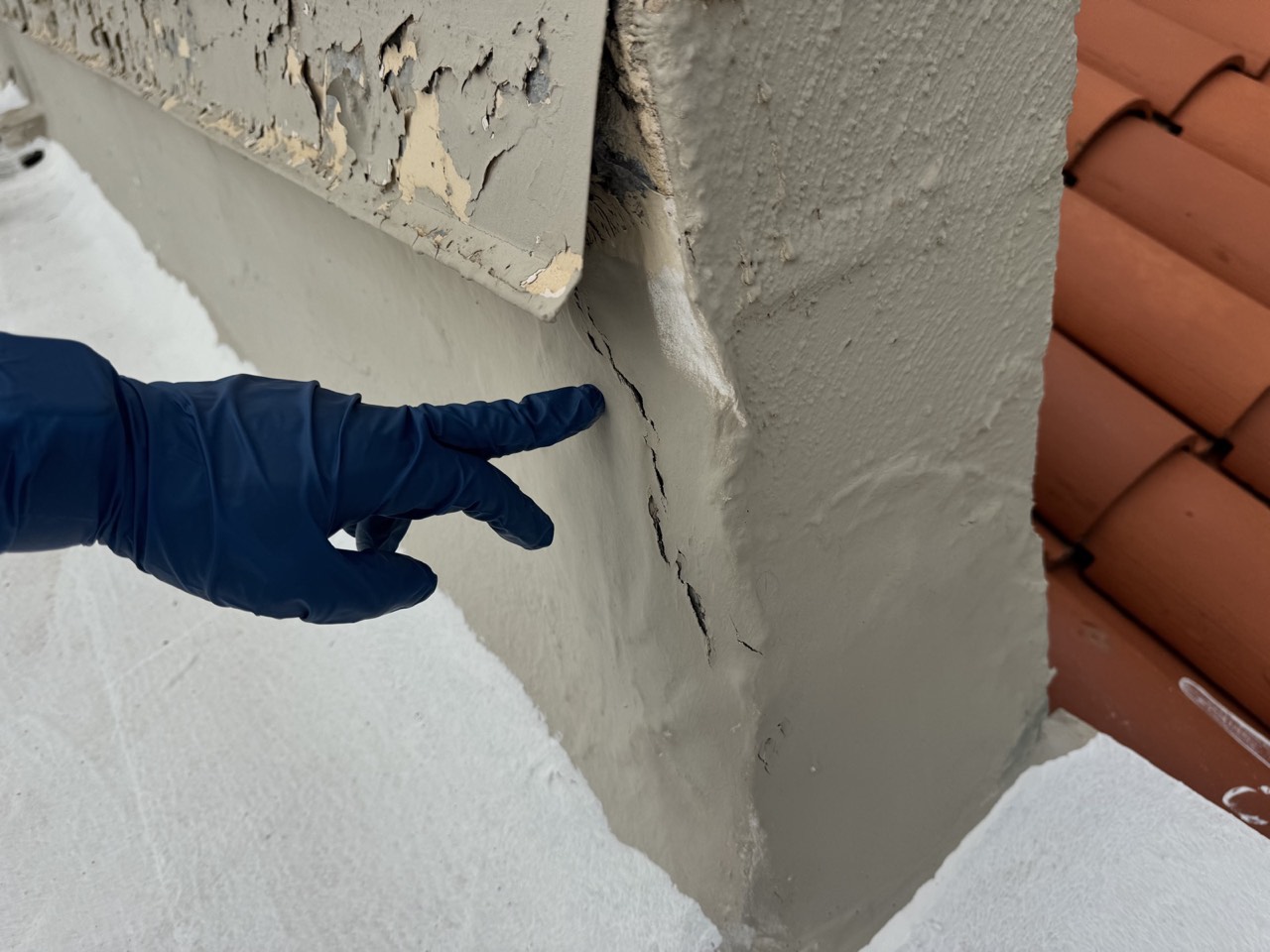
Flashing at the base and top of a parapet wall directs water away from the roof-to-wall joint. Deteriorated or improperly installed flashing is a common leak source.
The coping cap sits on top of the parapet wall and is meant to shed water off both sides. Cracked, loose, or poorly sealed coping is a frequent point of water entry.
Sealant at joints and penetrations along the parapet can degrade with UV and thermal exposure over time, and is a routine maintenance check item.
Several factors can combine at a parapet wall to create water-intrusion risk over time. Arizona's intense sun and seasonal weather make proper roof and parapet maintenance important, since parapets sit directly exposed to that sun, heat, and monsoon activity year-round.
Parapet walls are exposed to the same sun, heat, and monsoon conditions as the rest of the roof, which can lead to cracking in the wall surface, coping, or sealant joints over time.
Roof drains and scuppers near parapet walls need to function properly to move water off the roof. Ponding water near a parapet base increases the amount of time water is in contact with vulnerable flashing and joints.
Pipes, conduit, or other penetrations through or near a parapet wall are additional points that need proper flashing and sealant to stay watertight.
Parapets can be vulnerable to water intrusion because they combine several features in a small area: roof-to-wall transitions, changes in direction, seams, penetrations, and coping or bullnose details — all exposed to the weather. Cracks, deteriorated coatings, failed sealants, flashing problems, drainage issues, and similar defects can all contribute to water intrusion at a parapet. A reinforced coating detail can be one repair approach when the existing conditions are appropriate for that type of treatment — it isn't the right solution for every parapet, which is why inspection comes first.
When a parapet's condition is appropriate for coating-based repair, our process focuses on careful preparation and reinforced detailing at the areas most prone to water intrusion. The steps below describe how a reinforced coating detail can be applied — the actual scope for your property depends on what inspection finds.
We inspect the parapet walls, roof-to-wall transitions, bullnose/coping areas, cracks, seams, existing coating, sealant condition, penetrations, and any areas showing signs of water intrusion, along with surrounding roof conditions. The actual repair scope depends on the condition of the existing parapet and roofing system found during this inspection.
The parapet surface is cleaned and prepared before any coating or reinforcement work begins. Loose, deteriorated, compromised, or otherwise unsuitable material is addressed first — a reinforced coating detail is only appropriate once the underlying surface is in suitable condition. Coating alone is not a substitute for correcting structural deterioration.
Once the surface is prepared, we apply roof coating product #7000 as the base layer of the parapet waterproofing detail — a roof-coating material used as part of a reinforced coating system on a properly prepared, suitable substrate.
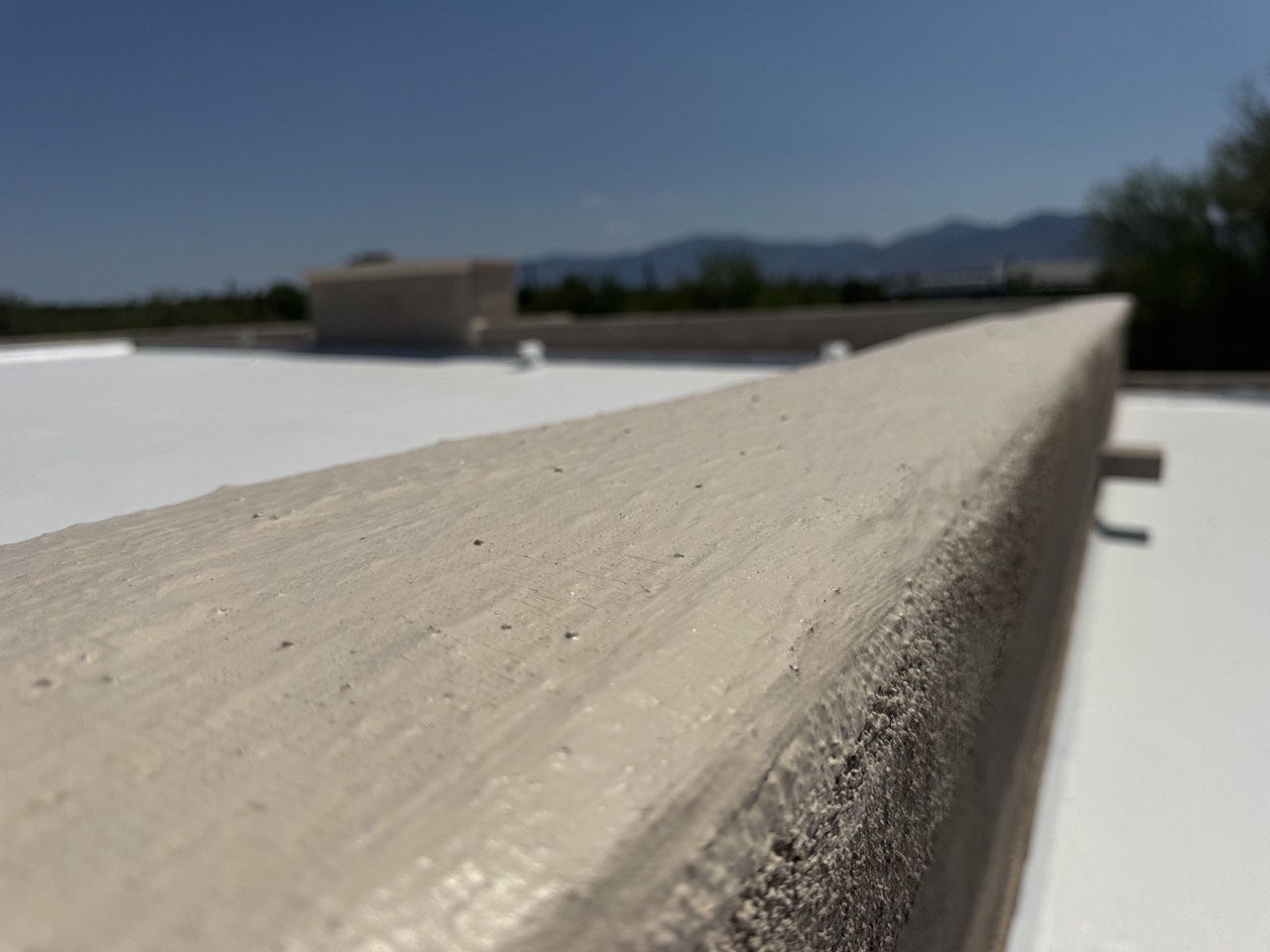
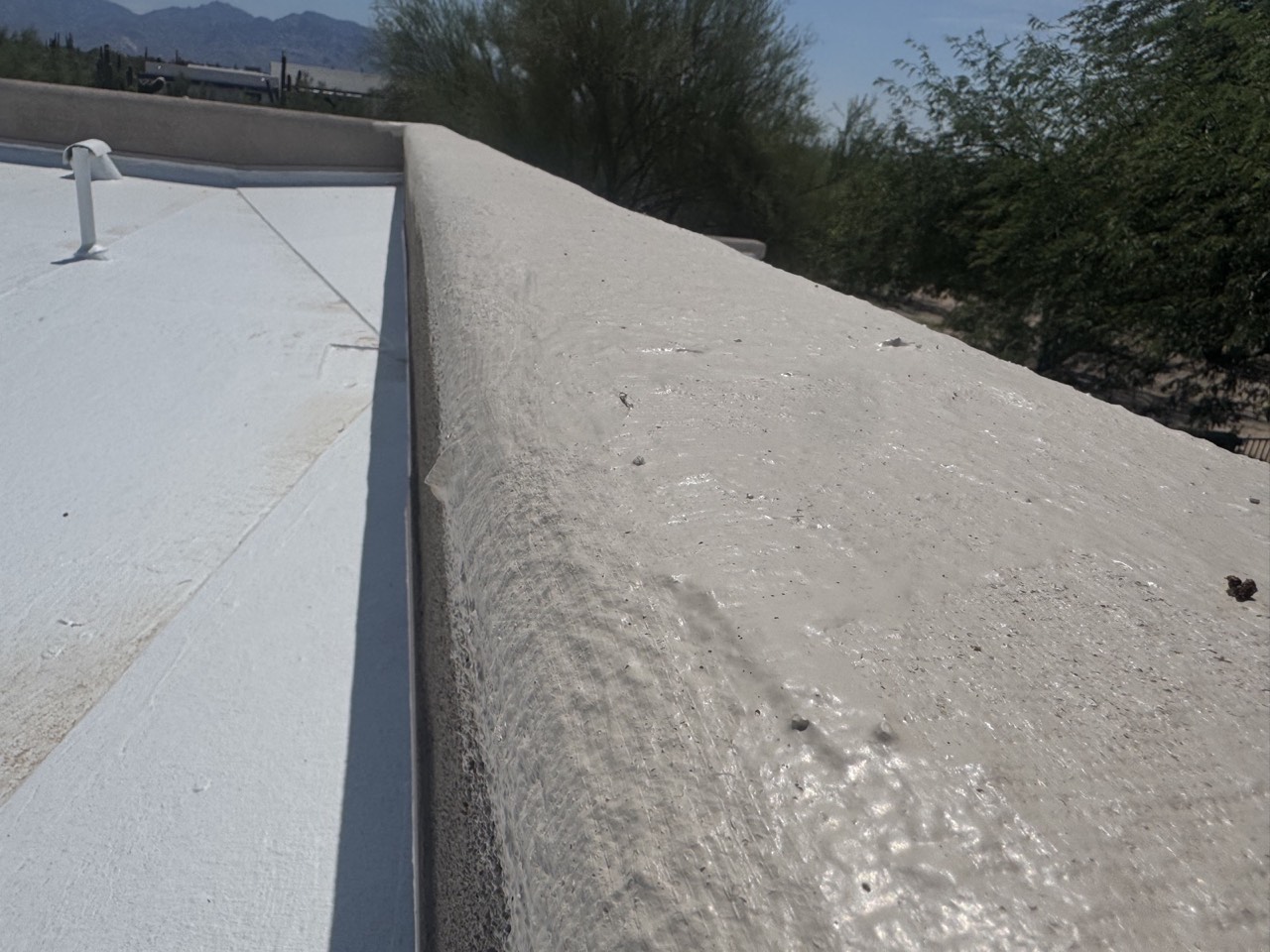
Polyester reinforcing fabric is embedded into the coating over the parapet detail, rather than laid dry on the surface. This reinforcement can help strengthen the treated area, particularly across roof-to-wall transitions and other locations where reinforced detailing is appropriate. Depending on the specific repair design, the reinforcement may extend over the top of the parapet and onto the appropriate interior wall or transition area — this configuration isn't the same on every parapet and depends on the conditions found.
We carefully detail the top of the parapet so the finished coating and reinforcement remain discreet from normal ground-level viewing. Where appropriate, the finished treatment is kept below the visible bullnose or coping line so the repair doesn't create an obvious coating line visible from the ground. The goal is proper detailing, appropriate waterproofing treatment, and a clean finished appearance with minimal visual impact — the specific approach depends on the parapet's design and existing conditions, and isn't the same for every property.
An additional application of #7000 is applied over the embedded polyester reinforcement to complete the reinforced coating detail — resulting in a continuous reinforced coating treatment over the prepared parapet area, subject to the substrate's condition and applicable product requirements.
Reinforced coating work addresses surface-level waterproofing and detailing — it is not a substitute for correcting serious underlying problems. If inspection identifies significant structural deterioration, severe substrate damage, major drainage problems, failed or damaged components, or conditions otherwise unsuitable for coating, additional repair work or a different roofing solution may be necessary. We don't diagnose structural problems from a webpage — inspection is what determines the appropriate scope for your property.
A parapet is a low wall that extends above the roofline on a flat or low-slope roof, common on commercial buildings and some residential flat-roof sections.
Leaks commonly develop at the roof-to-wall transition — through deteriorated coping, flashing, or sealant joints, or where nearby drainage isn't moving water away effectively.
We examine the coping, flashing, wall surface, sealant joints, and drainage near the parapet to identify the actual source of any water intrusion before recommending repairs.
No repair can guarantee permanent elimination of future leaks or water intrusion. Proper repair, when installed and maintained correctly, is designed to address the identified problem — ongoing maintenance and periodic inspection remain part of keeping any roof system performing well.
Product #7000 is a roof coating material we use as part of a reinforced parapet waterproofing detail, applied over a properly prepared substrate and combined with embedded polyester reinforcement at appropriate areas.
Polyester reinforcing fabric is embedded into the coating over vulnerable areas like roof-to-wall transitions, which can help strengthen the treated detail. Whether reinforcement is appropriate, and exactly where, depends on the specific repair design for your parapet.
Where appropriate, we detail the top of the parapet so the finished treatment stays discreet from normal ground-level viewing, keeping the coating below the visible bullnose or coping line. The specific approach depends on your parapet's design and existing condition.
No. A reinforced coating detail is one repair approach that can be appropriate when existing conditions allow for it. If inspection finds significant structural deterioration or other issues coating can't address, a different repair approach may be needed.
Not sure if your parapet is the source of a leak? An inspection can help find out.