Elastomeric roof coating systems for flat and low-slope roofs, prepared and applied to help protect your roof against Tucson's intense sun, heat, and monsoon exposure — when a coating is the appropriate solution for your roof's condition.
Southern Arizona roofs deal with a combination most parts of the country don't: intense, sustained UV exposure, extreme surface heat, and the sudden, heavy rainfall of monsoon season. Over time, that combination can dry out and break down unprotected roofing surfaces, leading to cracking, granule loss, and reduced weather resistance.
Constant sun exposure can accelerate the breakdown of roofing surfaces over time, which is part of why reflective, UV-resistant coatings are commonly used on Tucson flat roofs.
Roof surface temperatures in Tucson summers can run well above ambient air temperature, which can accelerate wear on aging or unprotected roofing materials.
Heavy, fast-moving monsoon storms test a roof's waterproofing and drainage all at once — areas with existing wear or poor drainage are where problems tend to show up first.
A roof coating is only as good as the surface underneath it. Our process is built around inspecting and preparing the roof first — not just applying product.
We inspect the existing roof surface, flashing, penetrations, and drainage to determine current condition and whether coating is an appropriate option.
The surface is cleaned and any necessary repairs are made before coating — loose or damaged material, deteriorated seams, and problem areas around penetrations are addressed first.
We evaluate the existing roofing material to help confirm the coating system is compatible with the substrate, which is an important factor in proper adhesion.
We look at how water moves across the roof. Areas with ponding water are noted, since coating alone does not resolve underlying drainage problems.
The coating system is applied according to manufacturer specifications and product requirements for the roof type and conditions.
Coatings are a maintenance item, not a one-time fix. We can discuss a maintenance and recoating schedule based on your roof's condition and exposure.
Not every roof is a good candidate for coating. Whether coating is appropriate depends on the roof's substrate, existing condition, drainage, and compatibility with the coating system — a professional inspection is the only reliable way to determine that for your specific roof.
The existing roof substrate is structurally sound, drainage is functioning properly, and the surface is compatible with the coating system after proper preparation and repair.
There is structural deterioration, severe substrate failure, major unresolved drainage or ponding issues, or an unsupported/compromised roof assembly. A coating is not designed to fix these underlying problems, and applying one over them is not a substitute for addressing the actual cause.
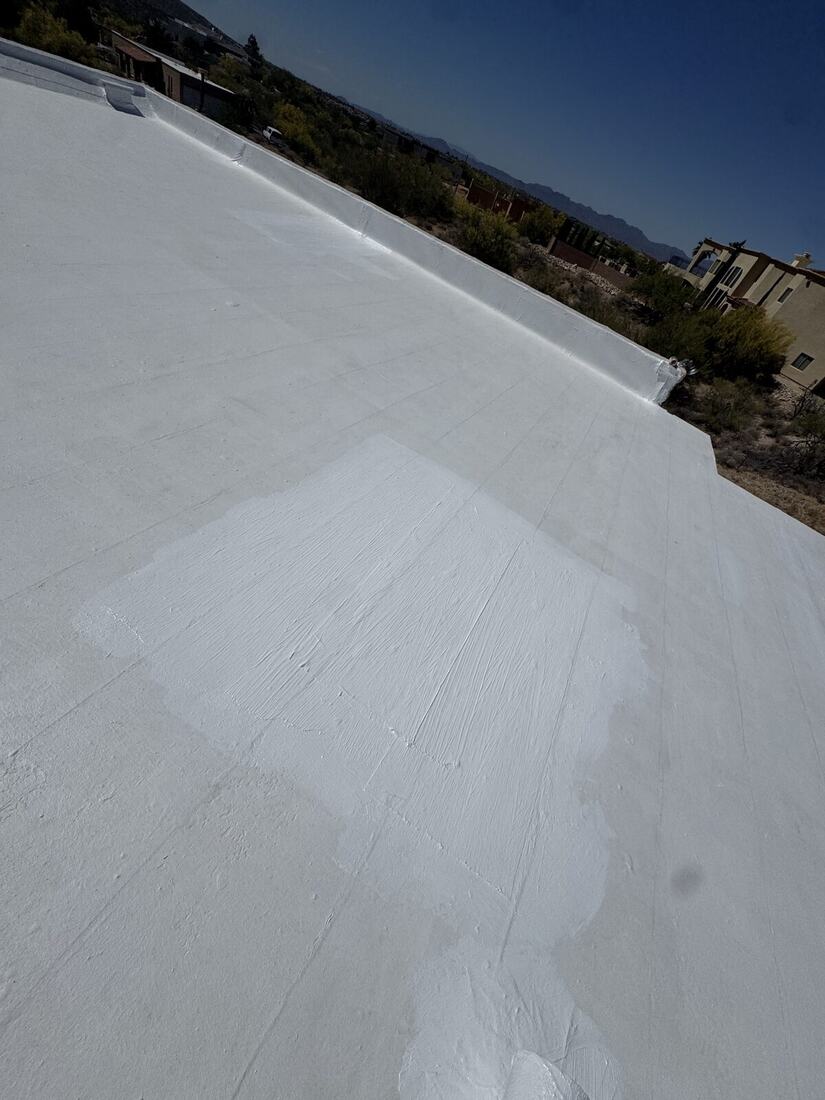
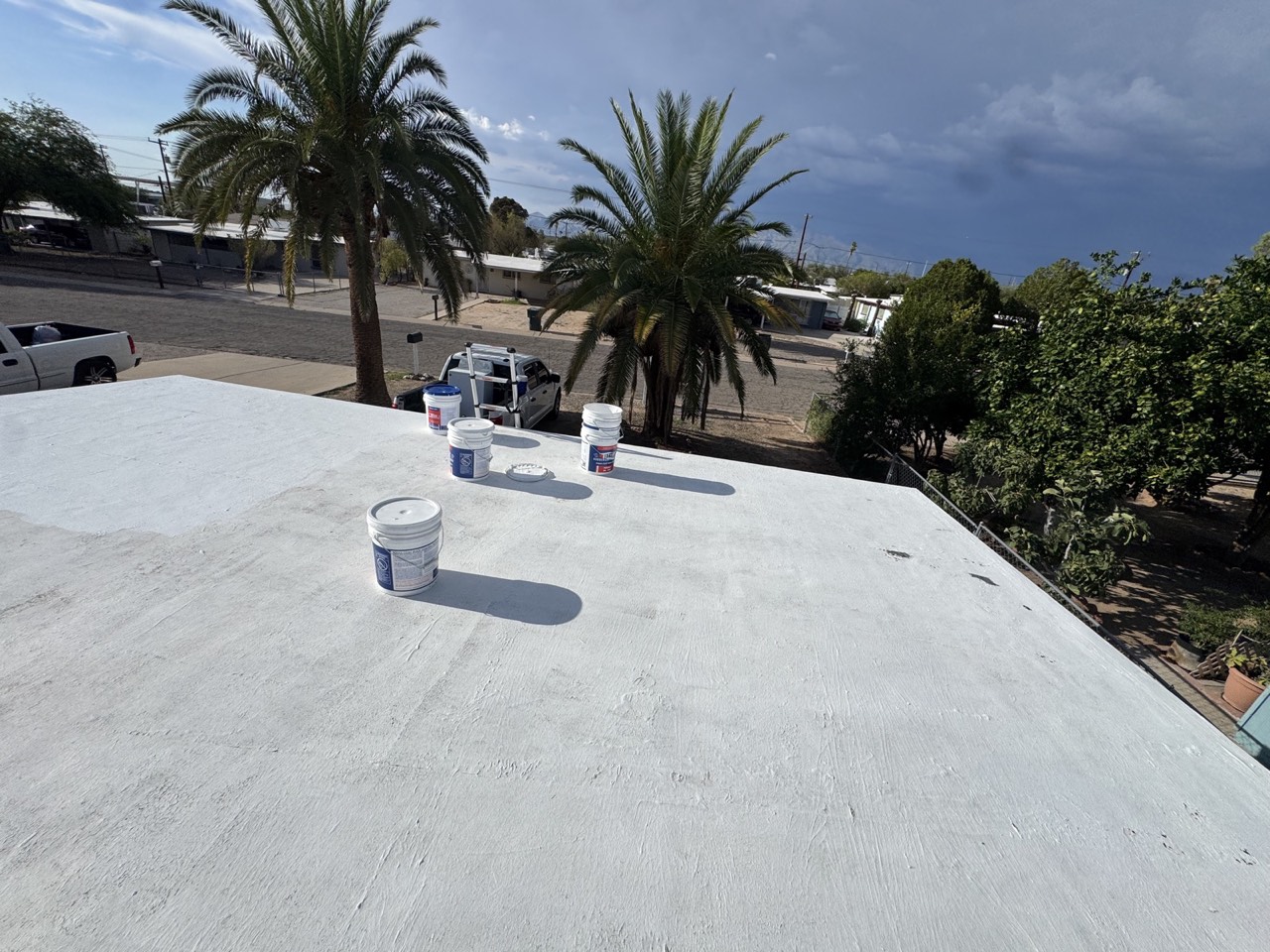
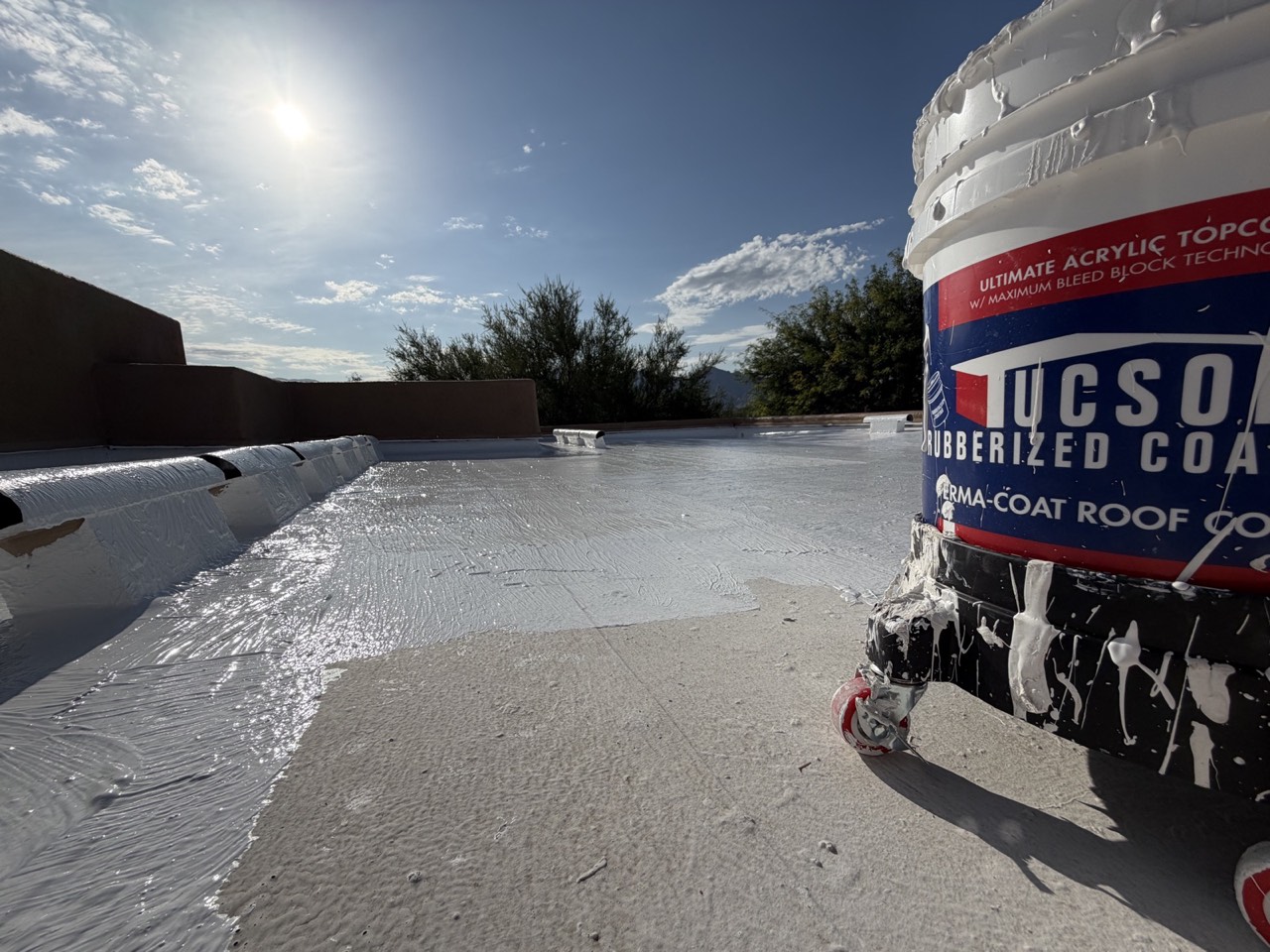
Flat Roof Coating Application
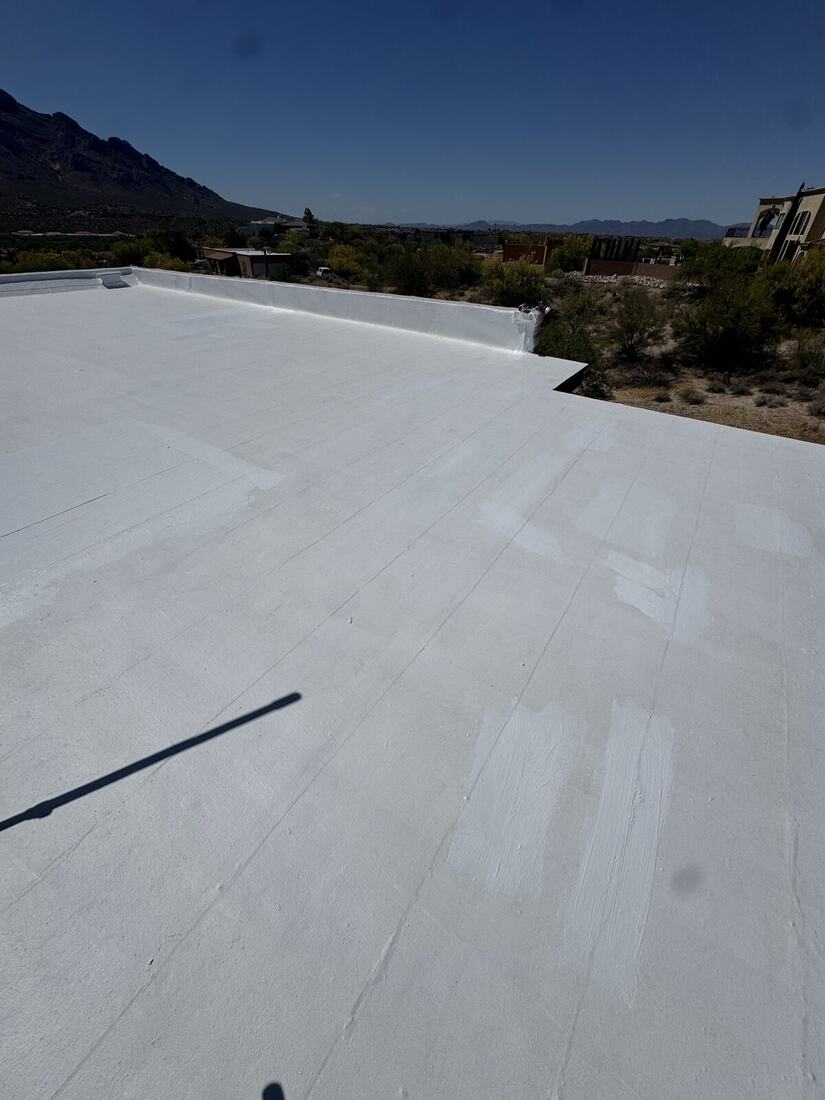
Completed Flat Roof Coating
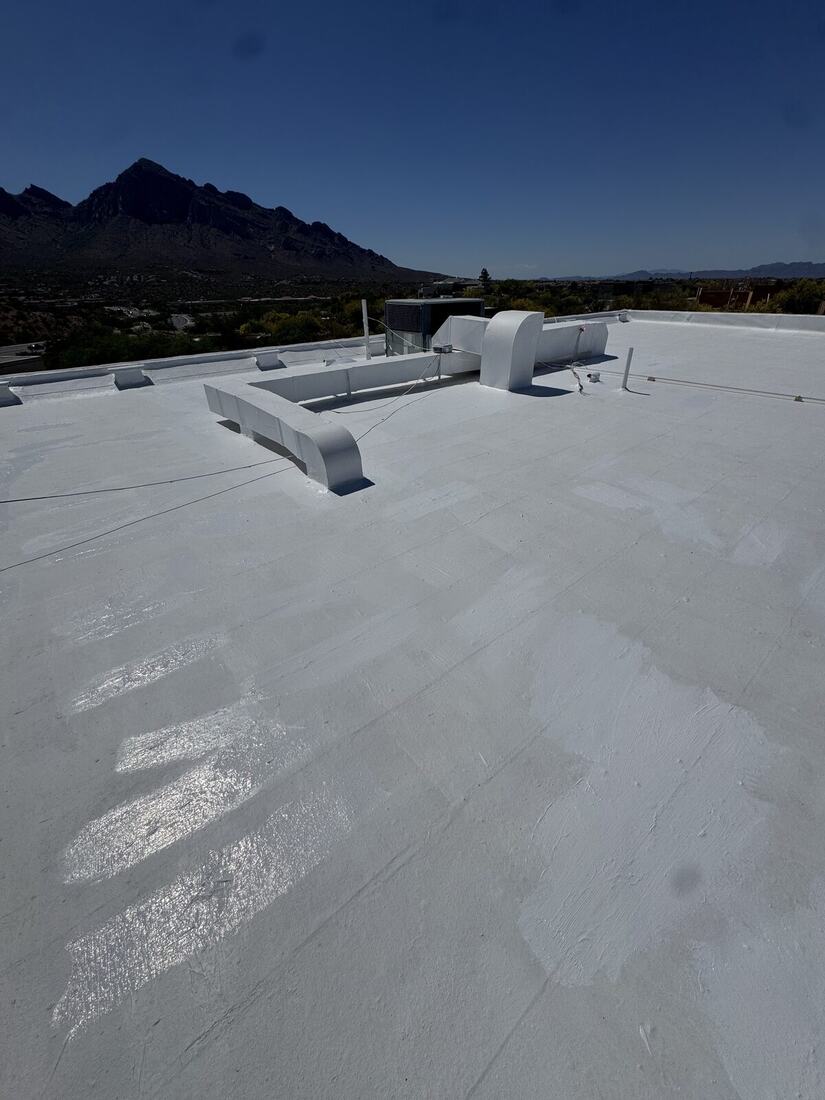
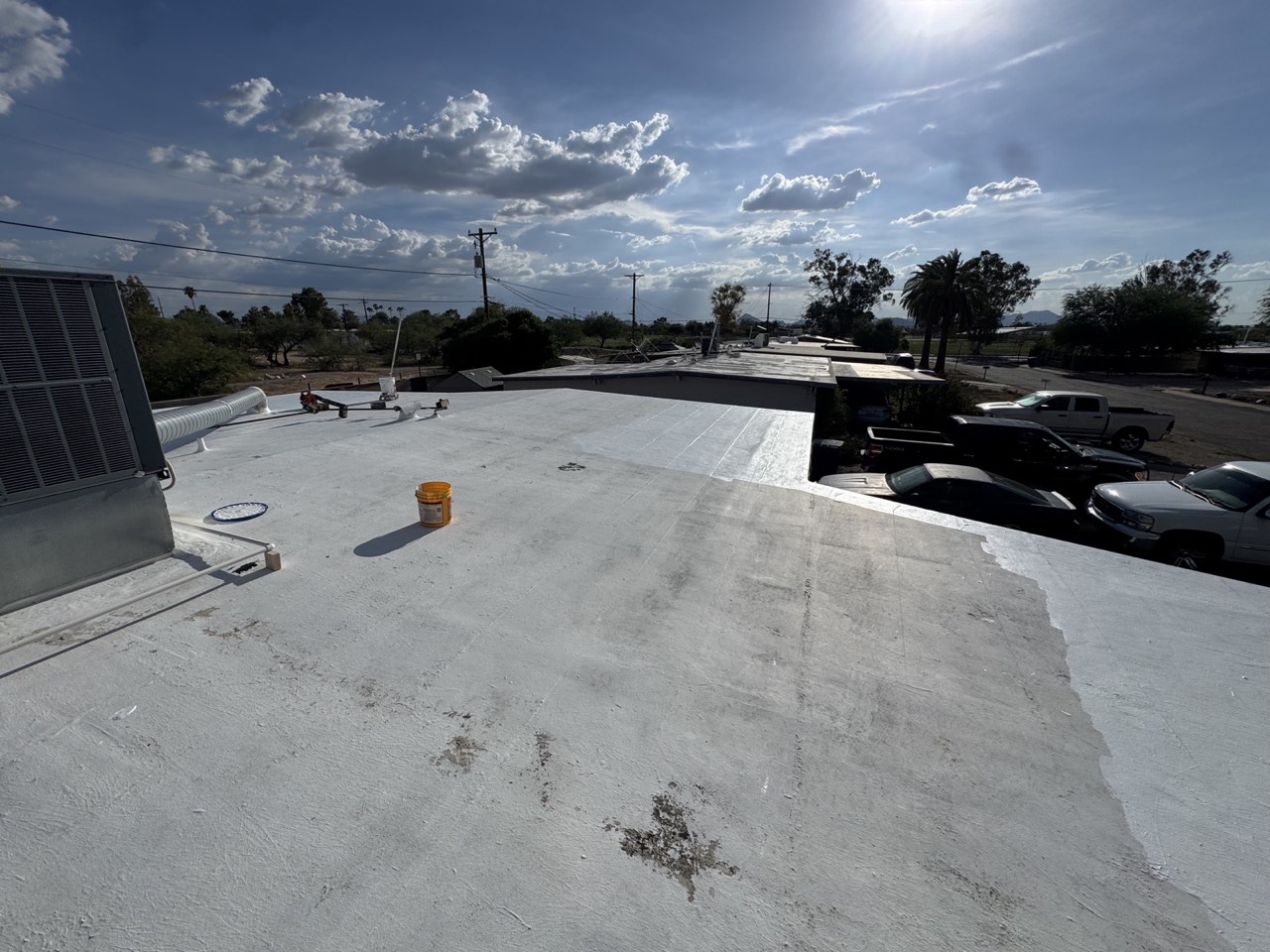
Coating Around Roof Penetrations
No. Coating suitability depends on the roof's substrate, existing condition, drainage, and compatibility with the coating system. An inspection can help determine whether coating is an appropriate option for your specific roof.
This depends on the coating product used, the roof's exposure, and its condition over time. We can review your roof's condition and discuss an appropriate maintenance timeline during an inspection.
Preparation typically includes cleaning the roof surface, repairing damaged or deteriorated areas, and confirming the substrate is suitable for the coating system before application.
A coating is designed to provide a protective, waterproofing surface layer when properly installed and maintained, but it is not a substitute for repairing structural damage, severe substrate failure, or unresolved drainage problems. Those issues need to be addressed directly.
Not sure if your roof is a good candidate for coating? An inspection can help determine the right option for your specific roof.